Common Emergency Failure Points on Greentown Commercial Roofs
Most after hours calls trace back to a short list of weak spots. Knowing which one is leaking helps the dispatcher route the right crew and materials.
| Failure Point | Typical Cause | Emergency Action |
|---|---|---|
| Seam separation (TPO/EPDM) | Aged adhesive, thermal cycling | Heat weld or seam tape, primer patch |
| Flashing at parapet wall | Caulk failure, wind uplift | Membrane wrap, termination bar reset |
| Drain bowl leak | Cracked lead, debris dam | Clear, seal, temporary boot |
| HVAC curb | Pitch pocket dry rot | Repour sealant, target patch |
| Hail puncture | Storm impact | Tarp, mark, photograph for claim |
| Ponding water saturation | Sagging deck, blocked scupper | Pump off, scupper clear, dry in |
What You Can Do Before the Crew Arrives
- Move inventory, files, and electronics out of the drip path
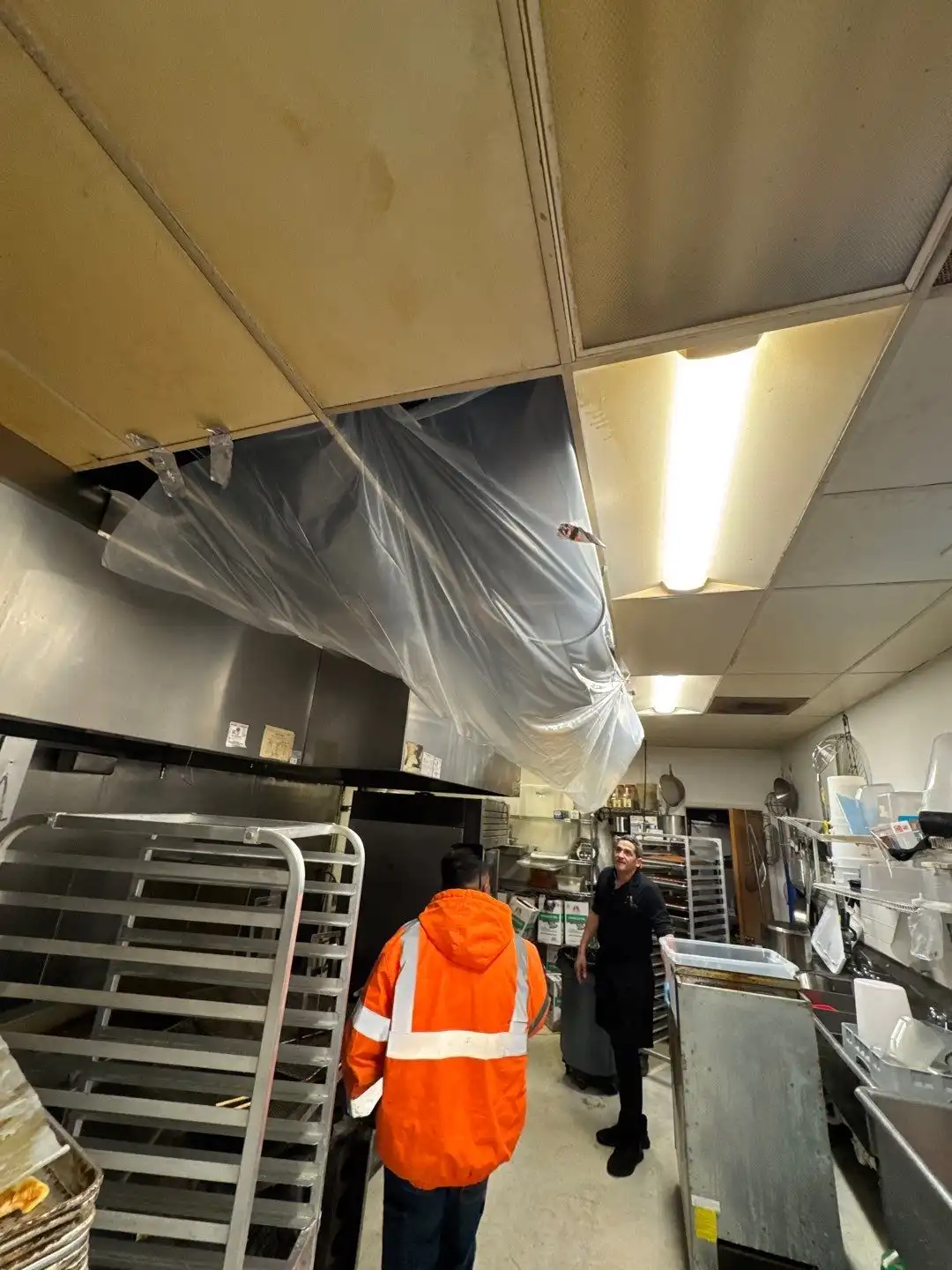
- Place buckets and lay plastic sheeting over fixtures
- Shut down power to affected circuits if water is near panels or lighting
- Photograph everything for your insurance file
- Note the time the leak started and any recent roof work
- Identify safe roof access points and unlock gates for the responding crew
- Pull any recent roof inspection reports or warranty paperwork to share on arrival
What Not to Do
- Do not send untrained staff onto a wet membrane
- Do not cut ceiling tiles open without containment below
- Do not run dehumidifiers in a space still actively leaking
- Do not apply consumer grade roof tar or spray sealant on a wet TPO or EPDM surface, as it can void the membrane warranty
How Greentown Commercial Roofing Triages an After-Hours Call
When a leak call comes in for a Greentown property, severity is assessed over the phone before a truck rolls. The dispatcher walks through a short script that helps us match the right materials, lift equipment, and crew size to the conditions on the ground.
Questions the Dispatcher Will Ask
- Roof type and approximate square footage of the affected area
- Whether water is actively dripping or has stopped
- What is below the leak (office, warehouse rack, server room, retail floor)
- Current weather and whether the roof is safe to walk
- Building height and access (interior hatch, exterior ladder, lift required)
- Whether power has been shut down near the active drip
Active leaks over sensitive areas like server rooms, pharmacy stock, or food prep get prioritized for tarping and dry in. Inspections for slower leaks or storm aftermath surveys are scheduled fast on the next available daylight slot, since membrane repair quality drops significantly when crews are working in the dark or on a saturated surface.
When Interior Water Damage Is Already in Play
Roof leaks rarely stay on the roof. Once water enters the deck, it travels along joists, drips behind walls, and saturates ceiling assemblies. If you see staining, sagging tiles, or wet drywall, the building needs both roof work and interior drying. We coordinate commercial water damage restoration in parallel with roof stabilization so insulation, drywall, and flooring dry on a controlled schedule rather than rotting in place.
Signs Interior Mitigation Is Needed
- Bubbling or sagging ceiling tiles across multiple bays
- Wet insulation visible above the grid
- Damp odor lingering after the leak stops
- Moisture meter readings above 18% in drywall
- Visible rust streaks on bar joists or deck fasteners
Emergency Containment Cost Ranges in Greentown
Pricing depends on roof size, access, and how much water has already entered the building. The chart below reflects typical Central Indiana ranges for the initial emergency visit, not the permanent repair.
What Drives the Number
- Roof height and lift or hoist requirements
- Material type (TPO, EPDM, modified bitumen, metal, BUR)
- Active weather during the call
- Saturation of insulation below the membrane
- Whether interior demo and drying is also needed
- After hours labor multipliers and crew size required for safe access
- Distance from the nearest material yard if specialty membrane is needed
Decision Framework: Repair, Restore, or Replace
An emergency call is the wrong moment to commit to a full roof project. Our crews stabilize the leak, then we schedule a daylight assessment with infrared scanning and core samples if the deck condition is questionable. The findings feed a clear repair or replace decision, often documented for your insurer. For broader context on that comparison, see our overview of commercial roof restoration versus replacement.
Decision Inputs We Document
- Membrane age and remaining service life
- Percentage of wet insulation by area
- Number of repair patches already present
- Drainage performance under load
- Budget cycle and capital planning window
- Warranty status and original installer documentation
Documentation for Insurance Claims
Most commercial policies cover sudden, accidental damage from wind, hail, or storm driven failure. Slow wear is usually excluded. We document the failure point with photos, moisture maps, and a written scope so your adjuster has what they need. For a deeper look at hail and storm patterns affecting roofs in this region, our attic water damage from roof leaks guide walks through how concealed damage gets traced back to the source.
What Your Adjuster Will Ask For
- Date and time the leak was discovered
- Weather records for that window
- Photos of the failure point and interior damage
- Itemized emergency scope and invoice
- Recommended permanent repair scope
- Core sample results showing wet versus dry insulation zones